
Why You Should Choose Epicurus To Be Your Guide - The Case for Epicurus
A Guide for This World and This Life
Section titled “A Guide for This World and This Life”Before we hear from the opponents, we set out what Epicurus taught and why it deserves to be chosen. The rest of the book tests that teaching against seven rival traditions. This chapter states it on its own terms.
Epicurus is the leader in the fight for happiness in this world. Nearly every one of the traditions examined in this book, in its own way, asks a man to look past the life he has toward something higher: a world of Forms, a providence, a heaven, a duty, a Nirvana. Epicurus asks him to look at the life he has and to make the most of it.
“We are born once and cannot be born twice, but for all time must be no more. But you, who are not master of tomorrow, postpone your happiness: life is wasted in procrastination and each one of us dies without allowing himself leisure” (VS 14). There is no second life in which to make up for a wasted first one. The wise man, Epicurus says, does not seek “the longest period of time, but the most pleasant,” just as “with food he does not seek simply the larger share and nothing else, but rather the most pleasant” (DL X.126).
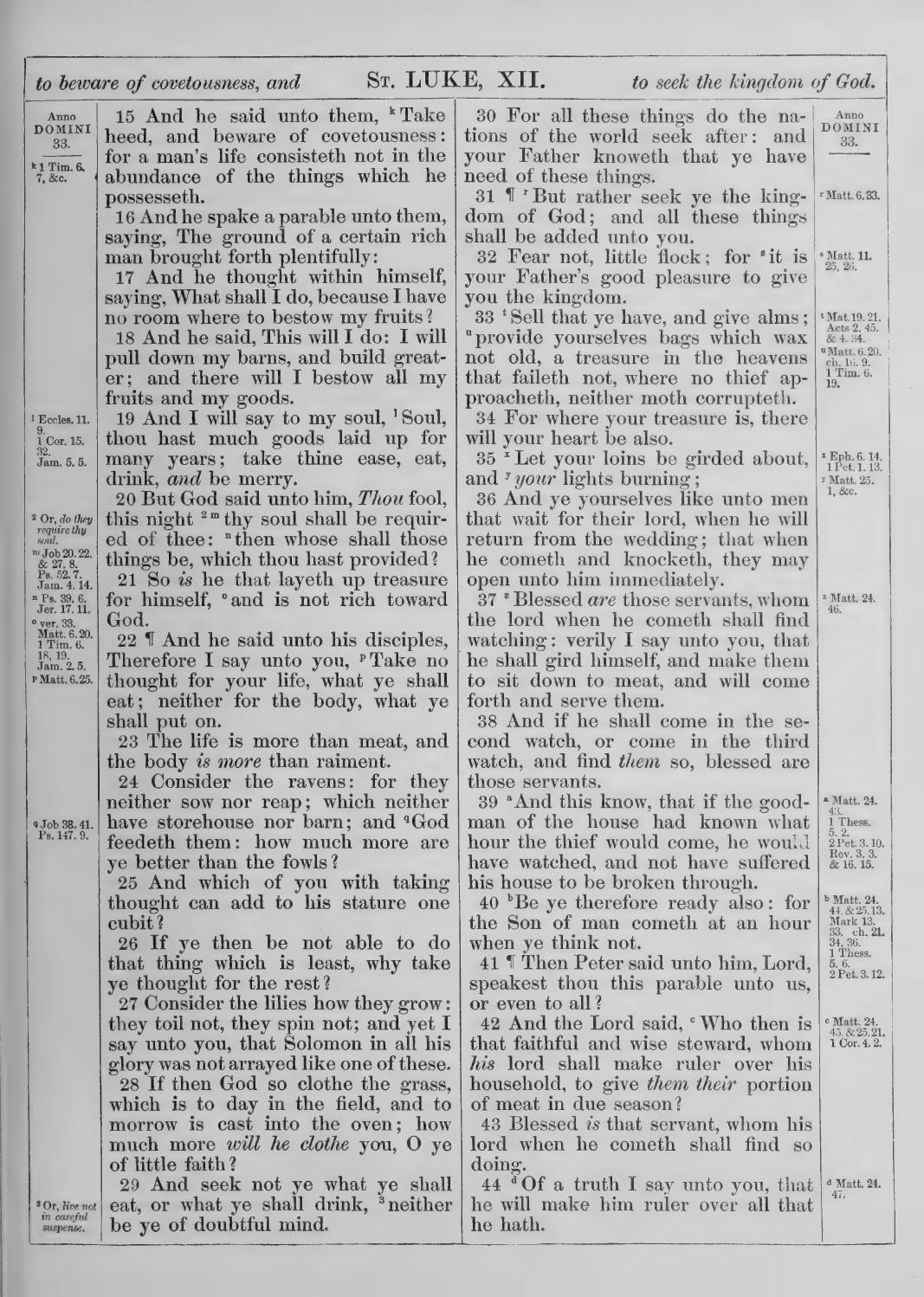
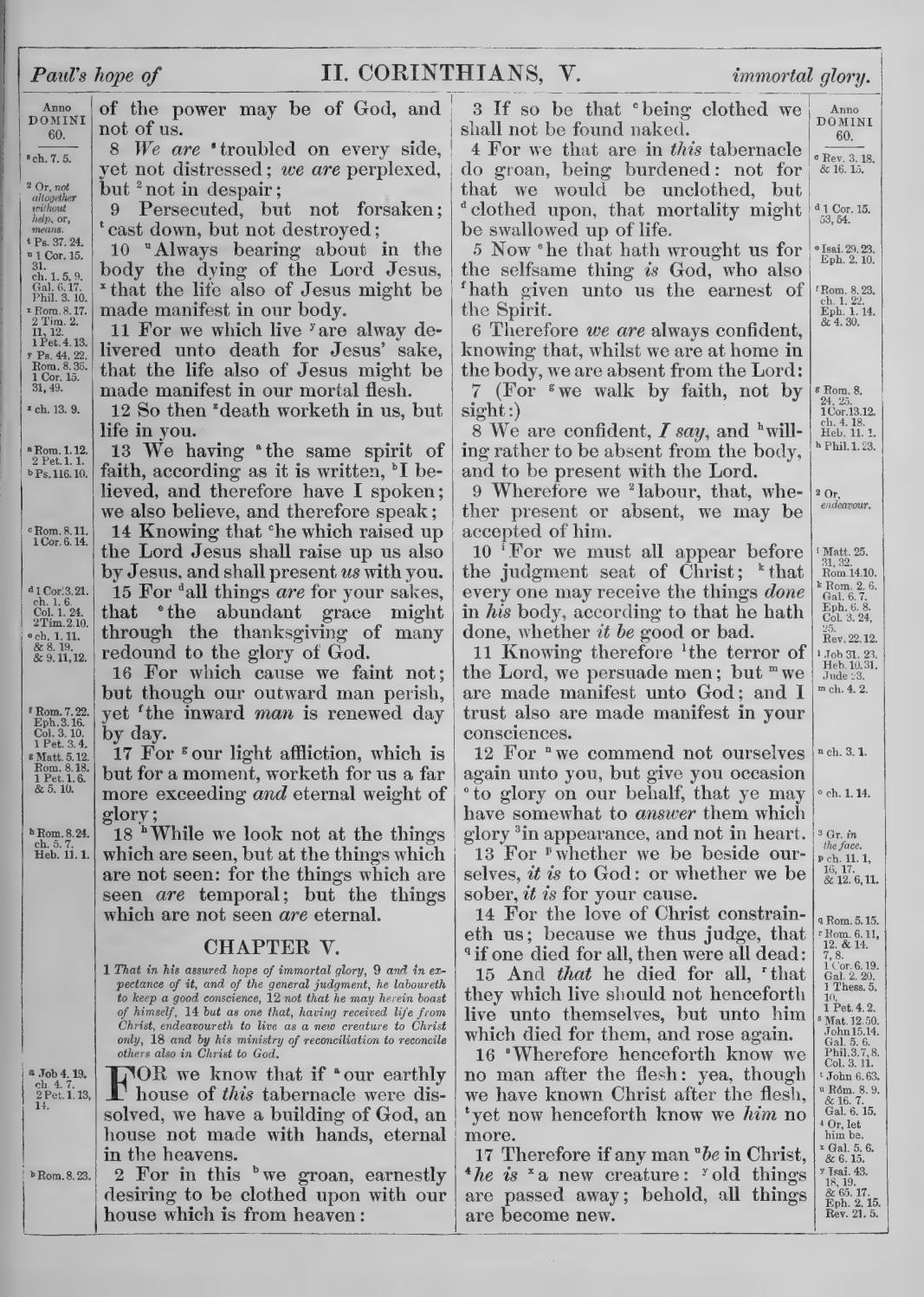
The contrast with the Gospel could not be sharper. In the parable of the rich fool, the man who says to his soul, “take thine ease, eat, drink, and be merry,” is told, “Thou fool, this night thy soul shall be required of thee.” The lesson drawn is “So is he that layeth up treasure for himself, and is not rich toward God,” and the disciples are told to provide themselves “a treasure in the heavens that faileth not” (Luke 12:19–21, 33). Paul goes further: “we look not at the things which are seen, but at the things which are not seen: for the things which are seen are temporal; but the things which are not seen are eternal” (2 Corinthians 4:18).
Epicurus looks at the things which are seen. That choice takes nerve. Lucretius puts the stakes plainly: “life itself would at once fall to the ground, unless you choose to trust the senses” (IV.507). To trust the senses is to be invested in this world and this life. It means taking what nature gives and treasuring it, rather than laying up treasure in heaven or in some other make-believe story. “We should not spoil what we have by desiring what we have not, but remember that what we have too was the gift of fortune” (VS 35).
And nature gives a great deal. Lucretius describes men who, even without gold or silver or banquet halls, “spread themselves in groups on the soft grass beside a stream of water under the boughs of a high tree and at no great cost pleasantly refresh their bodies, above all when the weather smiles and the seasons of the year besprinkle the green grass with flowers” (II.20–33). That is not the picture of a man waiting for another world. It is the picture of a man enjoying this one.
The rest of this chapter sets out the teaching on which that choice rests, in the three parts into which Epicurus divided philosophy: the Canon, or how we know; Physics, or the nature of things; and Ethics, or how to live.
The Canon: How We Know
Section titled “The Canon: How We Know”Epicurus held that we have three standards of truth that nature gives us: the senses, the anticipations (the general ideas that we form from repeated experience), and the feelings of pleasure and pain. “In The Canon Epicurus says that the tests of truth are the sensations and preconcepts and the feelings” (DL X.31).
Nothing stands above these standards. “Nor is there anything which can refute the sensations … nor again can reason, for all reason is dependent upon sensations” (DL X.32). Every sensation truly reports what strikes the sense organ. Error lies in the opinion we add to it, and opinion is tested by further evidence. “If you fight against all sensations, you will have no standard by which to judge even those of them which you say are false” (PD 23).
What cannot be seen is not closed to us, but we reach it only by reasoning from what is seen. “We must keep all our investigations in accord with our sensations … in order that we may have indications whereby we may judge both the problem of sense perception and the unseen” (DL X.38). In this way Epicurus reasoned from the fact of motion to the existence of the void, and from the qualities of bodies to the atoms.
Nearly every rival tradition in this book begins by doubting the senses in some way, and that doubt is the first step away from this world. The Epicurean begins by trusting them.
Physics: The Nature of Things
Section titled “Physics: The Nature of Things”“First of all, that nothing is created out of that which does not exist: for if it were, everything would be created out of everything with no need of seeds” (DL X.38). Nor does anything pass into nothing. “The universe always was such as it is now, and always will be the same” (X.39).
The universe is made of atoms and void, and it is infinite. Because the atoms are infinite in number, “there are infinite worlds both like and unlike this world of ours” (DL X.45). Each world comes to be from the motions of the atoms and passes away again. No god made our world, and none governs it.
A class of beings Epicurus refers to as gods does exist, but they are not what the many believe them to be. “The blessed and immortal nature knows no trouble itself nor causes trouble to any other, so that it is never constrained by anger or favour” (PD 1). “The impious man is not he who popularly denies the gods of the many, but he who attaches to the gods the beliefs of the many” (DL X.123).
The soul is “a body of fine particles distributed throughout the whole structure” (DL X.63), and it is scattered when the body dies. “Death is nothing to us, for that which is dissolved is without sensation; and that which lacks sensation is nothing to us” (PD 2). This life is the only one we will have, and that is why it matters so much.
Epicurus did not come to philosophy already sure that pleasure was the goal. He came to it with a question about where the world came from. Apollodorus reports that “he took to philosophy because he despised the teachers of literature, since they were not able to explain to him the passage about Chaos in Hesiod” (DL X.2). Epicurus would not accept that the world was made out of Chaos, and he went looking for the truth.
He followed that search wherever the evidence led. He urged on others “the constant occupation in the investigation of nature,” and he found his own peace “chiefly in a life so occupied” (DL X.37). The work of natural science is “to discover accurately the cause of the most essential facts” (X.78), and “we must not conduct scientific investigation by means of empty assumptions and arbitrary principles, but follow the lead of phenomena” (X.87). If the evidence had led Epicurus to a creator who issues commands on how to live, and who rewards and punishes men according to those commands, he would have been among the first to follow that path. It did not. The evidence led to atoms and void.
The same senses that show us how the world is made also show us how to live. We trust the senses, and so we trust nature, and nature tells every living thing to follow pleasure: “Every animal, as soon as it is born, seeks for pleasure, and delights in it as the Chief Good, while it recoils from pain as the Chief Evil” (On Ends I.30). But we cannot follow that guide well unless we know how nature works. That is why we study nature: to perfect our pursuit of pleasure through the truth. Cicero’s Epicurean spokesman says that “to learn what nature’s real requirements are improves the moral character also” (I.63). Epicurus says that “a man cannot dispel his fear about the most important matters if he does not know what is the nature of the universe but suspects the truth of some mythical story. So that without natural science it is not possible to attain our pleasures unalloyed” (PD 12). A comforting story will not do the work. Only the truth will.
We would like to know the truth in every case, but sometimes the evidence is not enough to show which of several explanations is correct. Lucretius gives the example of a dead body seen at a distance. We name “all the different causes of death, in order that the one real cause of that man’s death be mentioned among them” (VI.703). Every explanation must fit the facts, and none may bring gods back in: “Only superstition must be excluded, as it will, if one successfully follows the lead of seen phenomena to gain indications about the invisible” (DL X.104). When we have explanations that meet that test, we must not suppose that our inquiry “has not reached sufficient accuracy to contribute to our peace of mind and happiness” (X.80). So long as we have at least one explanation that fits the facts and leaves no room for the supernatural, we need not go on adding to the list forever.
Epicurus was therefore what Cicero’s Epicurean called him: “the great explorer of the truth, the master-builder of human happiness” (On Ends I.32). The two goals are not in conflict. Each supports the other.
Ethics: Pleasure in the Full Sense
Section titled “Ethics: Pleasure in the Full Sense”Pleasure Is the Goal
Section titled “Pleasure Is the Goal”Nature has given every living thing a guide from birth, the feelings of pleasure and pain. “We call pleasure the beginning and end of the blessed life. For we recognize pleasure as the first good innate in us, and from pleasure we begin every act of choice and avoidance, and to pleasure we return again, using the feeling as the standard by which we judge every good” (DL X.129).
Virtually every school of the ancient world agreed that the goal of life is happiness, eudaimonia. The quarrel was over what happiness is. Diogenes of Oinoanda, the Epicurean who in the second century AD carved his master’s teaching on a wall in his city for all to read, stated the issue plainly:
“If, gentlemen, the point at issue between these people and us involved inquiry into «what is the means of happiness?» and they wanted to say «the virtues» (which would actually be true), it would be unnecessary to take any other step than to agree with them about this, without more ado. But since, as I say, the issue is not «what is the means of happiness?» but «what is happiness and what is the ultimate goal of our nature?», I say both now and always, shouting out loudly to all Greeks and non-Greeks, that pleasure is the end of the best mode of life, while the virtues, which are inopportunely messed about by these people (being transferred from the place of the means to that of the end), are in no way an end, but the means to the end.” (Diogenes of Oinoanda, Fr. 32, trans. Martin Ferguson Smith)
That is the question at issue in every chapter of this book. It is not how to reach happiness, but what happiness is. The rival traditions answer virtue, or knowledge of the Good, or contemplation, or the calm that comes from suspending judgment, or obedience to God, or duty, or the end of desire. Epicurus answers pleasure.
What Epicurus Meant by “Pleasure”
Section titled “What Epicurus Meant by “Pleasure””Most readers hear the word “pleasure” in its narrowest sense: a moment of bodily excitement, a good meal, a drink, a thrill of the senses. Cicero assumed the same. “Every one uses the Greek word hēdonē and the Latin voluptas,” he says, “to mean an agreeable and exhilarating stimulation of the sense” (On Ends II.8). If that were all Epicurus meant, his critics would be right to call his philosophy the philosophy of the trough.
But Epicurus’ key insight was that every experience in life that we find to be desirable deserves to be considered within the term pleasure. His spokesman Torquatus explains: “The pleasure we pursue is not that kind alone which affects our physical being with a definite delightful feeling,—a positively agreeable perception of the senses.” Instead, “everything that causes gratification is a pleasure (just as everything that causes annoyance is a pain)” (On Ends I.37).
That takes in the whole of life, of the mind as well as of the body. Epicurus admitted “both kinds both in the soul and in the body,” the pleasures of rest and the pleasures of motion (DL X.136). He did not despise the body: “I know not how I can conceive the good, if I withdraw the pleasures of taste and withdraw the pleasures of love and those of hearing and sight” (DL X.6). But the pleasures of the mind are often the greater, “since the body can feel only what is present to it at the moment, whereas the mind is also cognizant of the past and of the future” (On Ends I.55). The joy of hope, the delight of a good memory, the company of friends, the thrill of a race won or a summit reached, the beauty of the world and the satisfaction of understanding it are all pleasures. “In philosophy pleasure goes hand in hand with knowledge” (VS 27). Torquatus sums up the goal as “complete freedom from pain and sorrow coupled with the enjoyment of the highest bodily and mental pleasures” (On Ends I.57).
Cicero insisted that this is not how anyone uses the word, and in a narrow sense he was right. But Epicurus had good reason for it. Nature gives us only two feelings by which to judge what to choose and what to avoid: “The internal sensations they say are two, pleasure and pain, which occur to every living creature, and the one is akin to nature and the other alien: by means of these two choice and avoidance are determined” (DL X.34). Whatever we find desirable, a good meal, the company of a friend, the rush of a zipline ride, an hour free of pain, reaches us through the feeling of pleasure, because there is no other feeling for it to reach us through. To restrict the name to a few thrills of the senses would leave most of what we value without a name, and outside the guide that nature gave us. Norman DeWitt put it this way:
“The extension of the name of pleasure to the normal state of being was the major innovation of the new hedonism. It was in the negative form, freedom from pain of body and distress of mind, that it drew the most persistent and vigorous condemnation from adversaries. The contention was that the application of the name of pleasure to this state was unjustified on the ground that two different things were thereby being denominated by one name. Cicero made a great to-do over this argument, but it is really superficial and captious. The fact that the name of pleasure was not customarily applied to the normal or static state did not alter the fact that the name ought to be applied to it; nor that reason justified the application; nor that human beings would be the happier for so reasoning and believing.” (Norman DeWitt, Epicurus and His Philosophy, p. 240)
When the Epicurean says that pleasure is the goal, then, he means the whole range of experiences, of body and mind, that make life worth living.
”Absence of Pain” Is Not Asceticism
Section titled “”Absence of Pain” Is Not Asceticism”Epicurus also wrote that “when, therefore, we maintain that pleasure is the end, we do not mean the pleasures of profligates and those that consist in sensuality … but freedom from pain in the body and from trouble in the mind” (DL X.131). Many modern readers take this to mean that Epicurus taught a kind of Buddhist withdrawal: want little, feel little, and call the emptiness peace. That is the reverse of what he meant.
The key is that, for Epicurus, there is no neutral state between pleasure and pain. “Epicurus consequently maintained that there ‘is no such thing as a neutral state of feeling’ intermediate between pleasure and pain … A man who is conscious of his condition at all must necessarily feel either pleasure or pain” (On Ends I.38). A life from which pain has been removed is not an empty life. It is a life filled with pleasure, and “complete absence of pain Epicurus considers to be the limit and highest point of pleasure” (same passage). “Absence of pain” is a description of a full life, not a recipe for an empty one.
Epicurus approached this question from the point of view of an old puzzle well known to the philosophers of his day, the puzzle of the heap, or sorites. Take a heap of grain. Where does the “heap” reside? In one particular grain, or in some number of grains? Add grains one at a time, or take them away, and try to find the point where we cross the line into a heap or out of one. No such point can be found, because a heap has no existence apart from the individual grains. “Heap” is our name for some number of grains taken together.
Epicurus applied the same reasoning to the good itself. Cicero quotes his words from “that book which contains all the doctrine of your school,” hoping to embarrass him with them: “Nor can I form any notion of the chief good, abstracted from those pleasures which are perceived by taste, or from what depends on hearing music, or abstracted from ideas raised by external objects visible to the eye, or by agreeable motions, or from those other pleasures which are perceived by the whole man by means of any of his senses” (Tusculan Disputations III.41). Cicero thought this exposed Epicurus as a sensualist. In fact it is the heap argument. Take away the pleasures of taste, then those of hearing, then those of sight, then every other pleasure of the senses and of the mind, one at a time, and look for the point at which “the good” is left standing by itself. That point never comes. When the last specific pleasure is gone, nothing is left, because the good was never anything apart from the pleasures, just as the heap was never anything apart from the grains.
The words “pleasure” and “happiness” do not mean the same thing, but both must be viewed from this same perspective. “Pleasure” has no existence apart from the specific pleasures of mind and body that we actually feel, and happiness is our name for a way of looking at our pleasures taken together. When we add pleasures or pains to our experience, or take them away, we never reach a separate thing called “pleasure” or “pain.” We always find specific pleasures or specific pains. So removing pains can never leave a zero, or a neutral blank. There are only two kinds of feeling, pleasure and pain (DL X.34), and when the pains are removed, the only thing that can remain is pleasure.
Which pleasures remain is a different question. That depends on the circumstances and on each man’s own choices: one man spends a painless hour with friends, another in study, another ziplining down a mountain, another racing a sailboat, another at a good meal, and another dreaming of the day he will fly to Mars. Epicurus did not answer that question for everyone, and he did not need to. The point of “absence of pain” is to identify the goal of life, which is happiness, not virtue or piety or logic, and to show how to reach it: by acting so that our lives hold more pleasure than pain.
Nor did Epicurus teach that desire itself is the enemy. The Buddhist scripture says: “Let, therefore, no man love anything; loss of the beloved is evil … From pleasure comes grief, from pleasure comes fear” (Dhammapada 211–212). Epicurus says the opposite: “of all the things which wisdom acquires to produce the blessedness of the complete life, far the greatest is the possession of friendship” (PD 27). He teaches us to satisfy our desires wisely, not to extinguish them.
Simple living, for Epicurus, was a means, not a vow. Plain food brings great pleasure when we are hungry, and the man who is used to it is not afraid of losing luxury. But “those have the sweetest pleasure in luxury who least need it” (DL X.130). And he warned against going too far the other way: “Frugality too has a limit, and the man who disregards it is in like case with him who errs through excess” (VS 63).
Choosing Among Pleasures
Section titled “Choosing Among Pleasures”Pleasures are chosen by measuring them against each other and against the pains they bring. “By a scale of comparison and by the consideration of advantages and disadvantages we must form our judgment on all these matters” (DL X.130). Desires are of three kinds: “some are natural (and necessary, some natural) but not necessary, and others neither natural nor necessary, but due to idle imagination” (PD 29).
Torquatus states the principle behind this classification: “the principle of classification being that the necessary desires are gratified with little trouble or expense; the natural desires also require but little, since nature’s own riches, which suffice to content her, are both easily procured and limited in amount; but for the imaginary desires no bound or limit can be discovered” (On Ends I.45). The classification is a tool for predicting how much pain the pursuit of a desire is likely to bring. It is not a fixed list. Epicurus never set out exactly how to decide which desires belong in which category, and a desire that falls in one category for one man may fall in another for a different man, or for the same man in different circumstances.
What the classification does make plain is the danger of desires that come from idle imagination. Because “no bound or limit can be discovered” for them, they can never be satisfied, and a desire that can never be satisfied is likely to bring more pain than pleasure.
But Epicurus never said, or implied, that we should limit ourselves to what is natural and necessary. He said the opposite: “We must not violate nature, but obey her; and we shall obey her if we fulfill the necessary desires and also the physical, if they bring no harm to us, but sternly reject the harmful” (VS 21). The desires that are not necessary are those whose craving “is easily dispelled, when the object is hard to procure or they seem likely to produce harm” (PD 26). When they are within reach and bring no harm that outweighs the pleasure, there is nothing to dispel. A feast with friends, a mountain climbed, a company built, a voyage to the far side of the world, or one day to Mars, is as much a part of the Epicurean life as a quiet evening with a book, whenever the pleasure is worth its cost.
The pleasant life is not a life of drinking bouts and luxury but of “sober reasoning, searching out the motives for all choice and avoidance, and banishing mere opinions, to which are due the greatest disturbance of the spirit” (DL X.132). Sometimes we accept a pain for the sake of a greater pleasure, and sometimes we pass over a pleasure that would bring a greater pain. The measure is always the whole life.
Virtue, Justice and Friendship
Section titled “Virtue, Justice and Friendship”Virtue is not the goal but the means. “Virtue is preferred for the sake of pleasure, and not for its own sake, just as the doctor’s art is employed for the sake of health” (DL X.138). Yet “it is not possible to live pleasantly without living prudently and honorably and justly” (X.132). Justice is not a heavenly form or a divine command but “a pledge of mutual advantage to restrain men from harming one another and save them from being harmed” (PD 31). And friendship, the greatest instrument wisdom provides, is the setting in which the pleasant life is lived.
Confidence, Not a Guarantee
Section titled “Confidence, Not a Guarantee”Epicurus did not promise anyone happiness. A promise would mean that the outcome is fixed in advance, and Epicurus denied that our lives are fixed. Of the things that happen, some happen by necessity, “and some by chance, and some are within our control; for while necessity cannot be called to account, he sees that chance is inconstant, but that which is in our control is subject to no master, and to it are naturally attached praise and blame” (DL X.133). Our choices are our own. Chance can still strike even the wise man, though “in but few things chance hinders a wise man, but the greatest and most important matters reason has ordained and throughout the whole period of life does and will ordain” (PD 16). And so Epicurus “thinks it better to be unfortunate in reasonable action than to prosper in unreason” (DL X.135).
What Epicurus offered was not a guarantee but a reasoned confidence. “The flesh cries out to be saved from hunger, thirst and cold. For if a man possess this safety and hope to possess it, he might rival even Zeus in happiness” (VS 33). “The stable condition of well-being in the body and the sure hope of its continuance holds the fullest and surest joy for those who can rightly calculate it” (Fragment 11, On the End of Life). The man who meditates on these teachings “night and day,” Epicurus wrote, “shall live like a god among men” (DL X.135).
That expectation does not look to a reward after death, or in another world, or for obedience. It looks to this life, here and now. Some things will always be beyond our control, but how we choose is not, and the man who has the nerve to trust the senses that nature gave him, to learn the truth about the world, and to take hold of the pleasures that life offers can face the future with confidence that he is following the best path to happiness that life allows.
The chapters that follow show how seven traditions answered the same questions, and what they asked men to give up in exchange for their answers. The final chapter returns to the choice this one began with.